

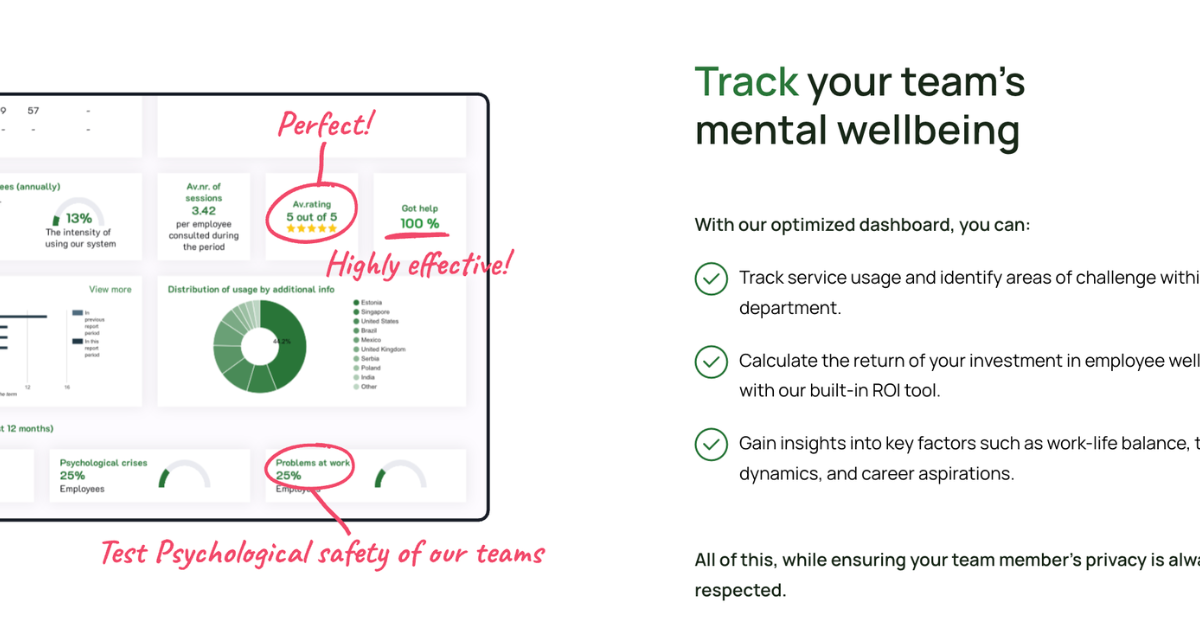
Платформы психического здоровья стали необходимостью в сегодняшней всё более сложной, разнообразной и распределенной рабочей среде. Однако без структурированного процесса для сбора, организации и перевода данных в действенные инсайты эти платформы рискуют не раскрыть свой полный потенциал.
Через знания, полученные с помощью HR-панели, организации могут перейти от добрых намерений к эффективным действиям, поддерживающим как благополучие сотрудников, так и бизнес-показатели.
HR-панели позволяют рано выявлять возникающие паттерны, такие как растущее количество прогулов, снижение вовлеченности или чрезмерные переработки в определённых командах. Это сигналы, которые, если их игнорировать, могут перерасти в выгорание или нежелательную текучесть кадров.
Предоставляя видимость в реальном времени по индикаторам благополучия, таким как уровни стресса, тенденции настроения и использование ресурсов, панели позволяют HR-командам вмешиваться раньше, вместо того чтобы полагаться только на ежегодные опросы или анекдотическую обратную связь.
Поскольку данные агрегированы и анонимизированы, HR также может выявлять более широкие организационные риски, такие как системный стресс или отстранённость, прежде чем они повлияют на производительность, культуру и удержание сотрудников.
Сегментированные данные по командам, ролям или местоположению дают HR возможность стратегически распределять ресурсы, а не полагаться на универсальные инициативы.
Инсайты о том, как различные группы сотрудников взаимодействуют с услугами психического здоровья, позволяют адаптировать поддержку для удалённых сотрудников, сотрудников, работающих в условиях высокого давления, лиц, осуществляющих уход, или других приоритетных групп населения.
Этот целенаправленный подход улучшает актуальность, степень участия и воспринимаемую справедливость, обеспечивая соответствие инициатив по благополучию реальным нуждам сотрудников.
Панели преобразуют фрагментарные данные в чёткие визуальные инсайты, поддерживающие обоснованное принятие решений на уровне как HR, так и руководства.
Менеджеры получают видимость тенденций благополучия команды, что позволяет им брать на себя ответственность за вмешательства, а не реагировать только тогда, когда проблемы становятся критическими. Для HR-руководителей панели предоставляют доказательства, необходимые для приоритизации инициатив, распределения бюджетов и интеграции психического здоровья в регулярные бизнес-разговоры.
Они также упрощают внутреннюю отчетность, облегчая коммуникацию о влиянии, прогрессе и рисках с высшими заинтересованными сторонами на понятном им языке.

Хорошо реализованные программы психического здоровья напрямую влияют на финансовую эффективность. HR-панель — это инструмент, позволяющий организациям максимально увеличить эту отдачу.
Связывая тенденции благополучия с бизнес-результатами, такими как производительность, удержание сотрудников, прогулы и расходы на здравоохранение, панели предоставляют конкретные доказательства, обосновывающие постоянные инвестиции.
Исследования последовательно показывают, что на каждый вложенный в инициативы по психическому здоровью евро организации могут рассчитывать на возврат в размере 4–5 евро. Панели помогают гарантировать, что эти программы не только реализуются, но и оптимизируются для максимальной эффективности.
Поскольку данные о психическом здоровье глубоко личные и часто стигматизируются, надёжные меры защиты конфиденциальности являются обязательными. HR-панели должны быть разработаны с учётом доверия и соблюдения нормативных требований.

Эффективные панели фокусируются на ясности, а не на объёме. Конкретный набор ведущих и запаздывающих индикаторов предоставляет наиболее действенные инсайты:
Оснащая HR-команды данными инсайтов, платформы психического здоровья позволяют организациям строить более здоровые, более устойчивые и более продуктивные рабочие места, эффективно управляя как человеческими, так и бизнес-рисками.

Автор контента по психологии в Siffi
Морган создает содержательные и увлекательные материалы, которые делают разговоры о психическом здоровье более человечными и доступными. В Siffi она объединяет повествование с стратегией для развития культуры заботы и связи на рабочем месте.